- Home
- /
- Whole-House Rewiring
Whole-House Rewiring
Your One-Stop Shop for Whole-House Rewiring in Oakland
New wiring, finished walls, fresh paint and the permit closed. One contract.

Whole-house rewiring in Oakland and the East Bay, done as one job. We replace the old wiring, upgrade the panel when the house needs it, repair the plaster and drywall, paint, and close the permit. You get your house back finished, not full of holes. Most of our rewires are in older homes in Rockridge, Temescal, Piedmont and Berkeley.
Why Knob and Tube Has to Go
Knob and tube and early cloth-covered wire were built for a few lights and a radio. Today’s house runs on a lot more.
Insurance
Many insurers won’t write or renew a policy on a house with knob and tube.
Selling
A buyer’s inspector will flag it, and it comes back as a repair request or a lower offer.
Going electric
A heat pump, induction range or EV charger needs circuits and a panel the old system can’t give you.


What Our House Rewiring Includes
- New wiring, outlets, switches and fixture connections throughout
- Panel upgrade, coordinated with PG&E when the service needs to grow
- Permit, inspections and sign-off
- Plaster and drywall repair, finished to match
- Paint
- The small trade work that comes with it: a range hood, a plumbing fix, trim
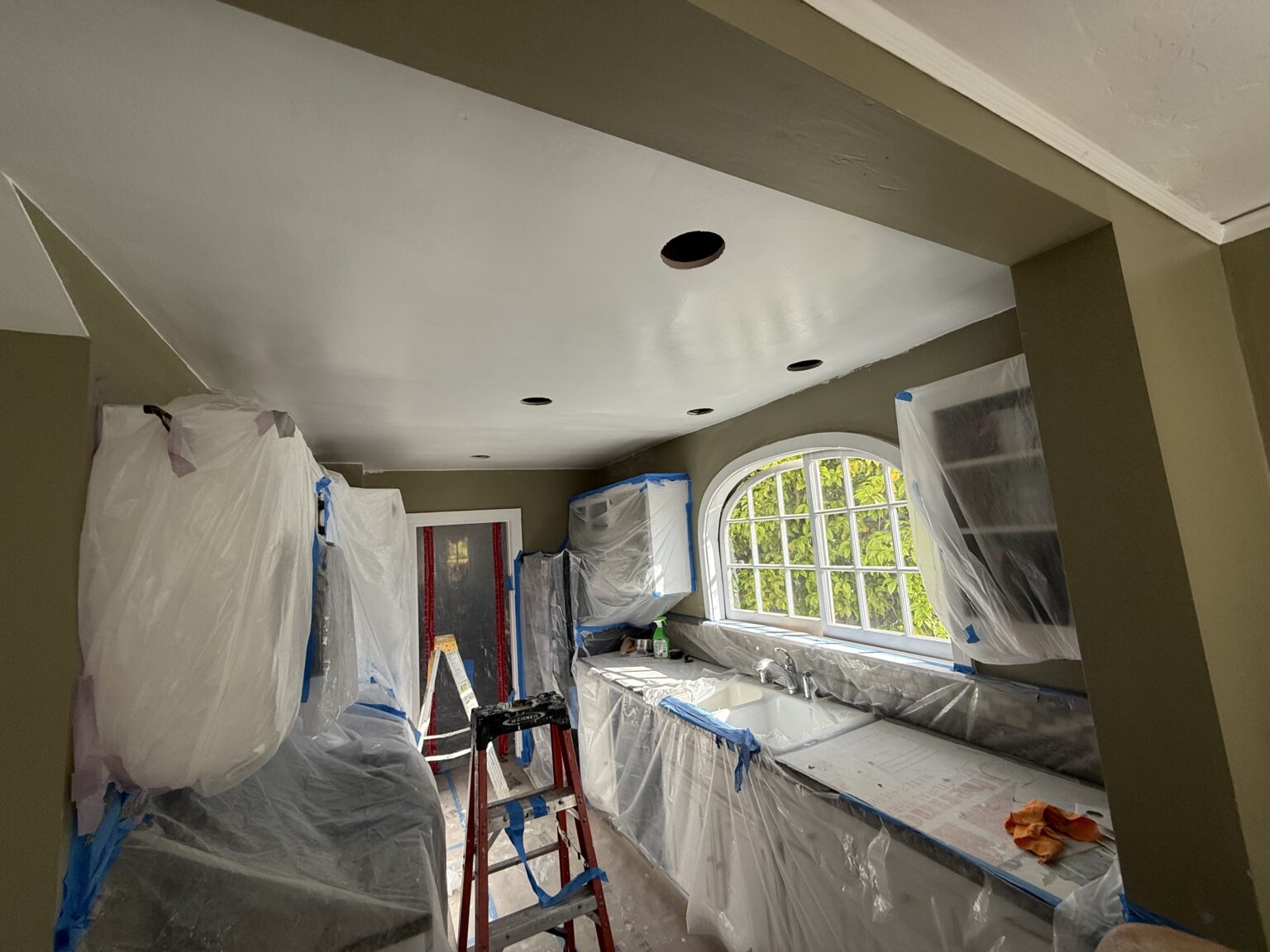
- HEPA filtration, dust barriers and protection for floors and furniture
Your Electrician Stops at the Wires. We Don’t.
| C-10 electrician | Beyond Green | |
|---|---|---|
| New wiring and panel | Their trade | Included |
| Permit and inspections | Electrical only | The whole job |
| Plaster and drywall repair | Gray area. Patching at best | Our core work. Walls finished to match |
| Hand-troweled or textured plaster | Not their trade | Matched by plaster and specialty finish subcontractors |
| How much wall gets opened | Varies by crew | Planned before the first cut. As little as the house allows |
| Paint | Not their trade. Separate bid | Included |
| HEPA filtration, dust barriers, floor and furniture protection | Not in a typical electrical bid | Set up before the first wall opens |
| Hood, small plumbing, trim | Not their trade | Included |
| Bids | One of three or four | One price |
| Schedule | You line up the trades | One schedule |
| When it’s over | The wires are done | The house is done |
Dust Is the Job
Opening plaster walls makes fine dust, and fine dust goes everywhere. So before the first wall opens, the work area is wrapped in plastic, the floors and furniture are covered, and a 2,000 CFM HEPA air scrubber goes on. Its filter is certified to catch 99.97% of particles down to 0.3 microns, the same HEPA standard hospitals use. The air in the work area runs through that filter while we work.
- Plastic barrier walls around the work area
- Floors and furniture covered
- HEPA air scrubber, up to 2,000 CFM
Three Small Holes, Not Half a Wall.
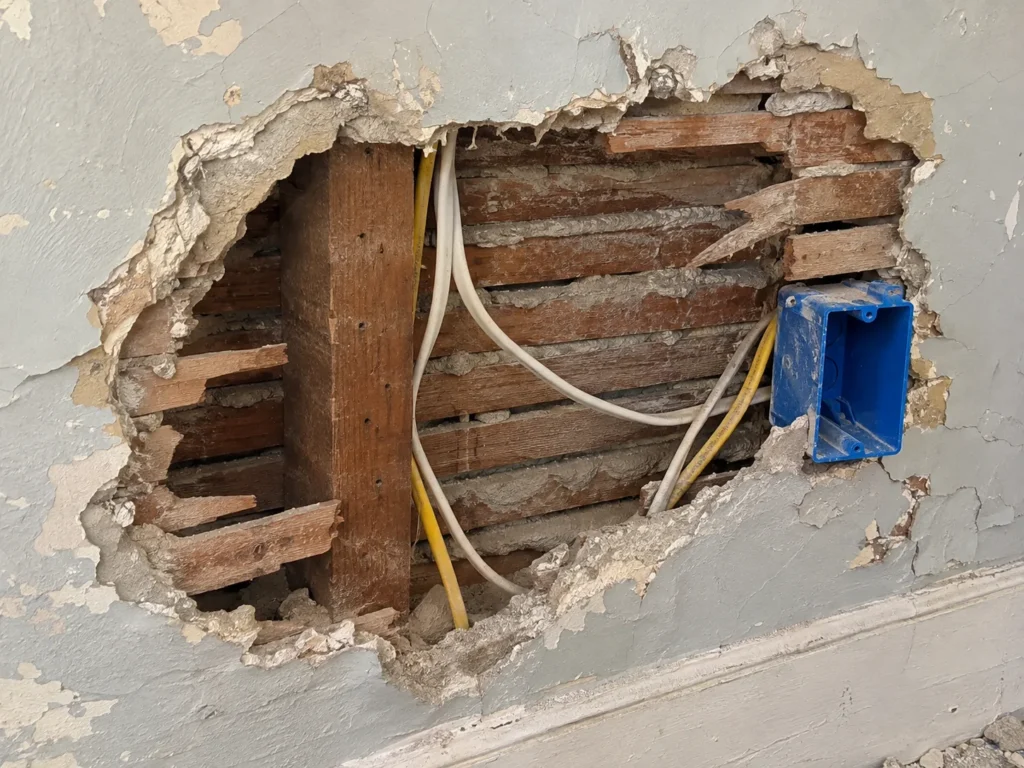
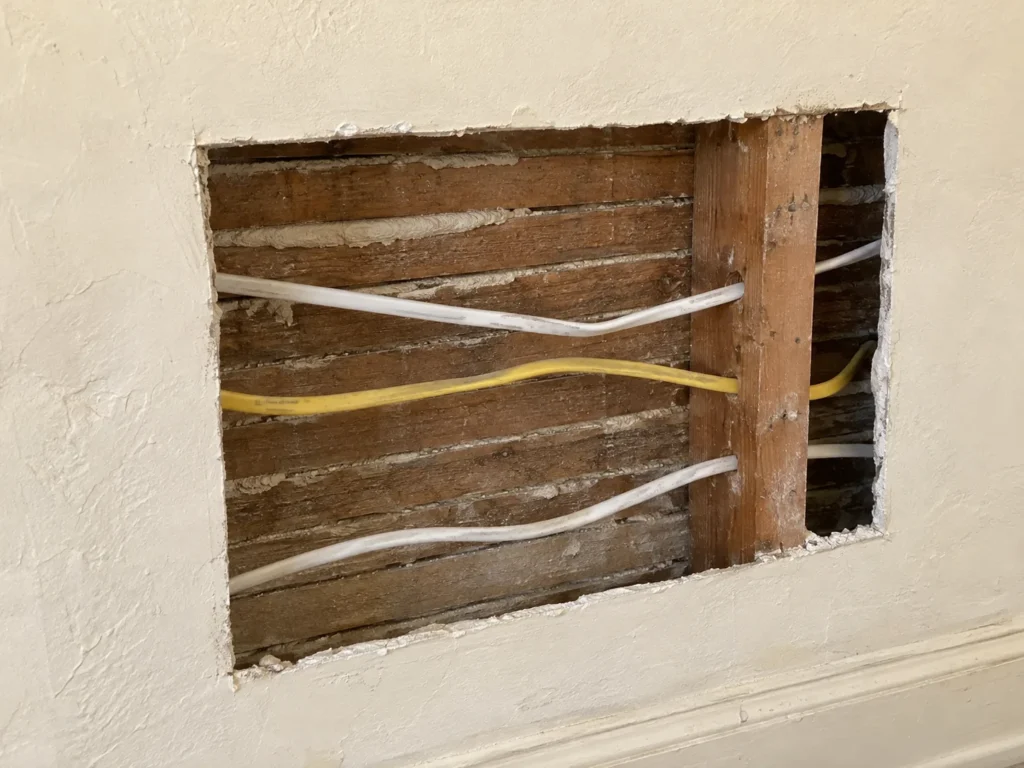
How much wall comes out depends on who’s holding the saw. A skilled crew can move a switch and add a light through three small openings. A less experienced one cuts a long trench, then spends longer patching it. We plan every opening before the first cut: where the studs, blocking, insulation and pipes are. Some walls are easy and some aren’t, and we’ve opened enough of both to know which is which. Houses are our whole job. For us, the rewire is the easy part.
Hand-Troweled Plaster? No Problem.
Older East Bay homes often have real plaster, and the best ones have finishes worth keeping: hand-troweled walls, smooth coats, textures someone took real time to get right. When we open those walls, they get repaired in plaster by plaster and specialty finish subcontractors who do this work every day. The patch is matched to the texture around it, so the wall reads as one wall again.
House Rewiring Process
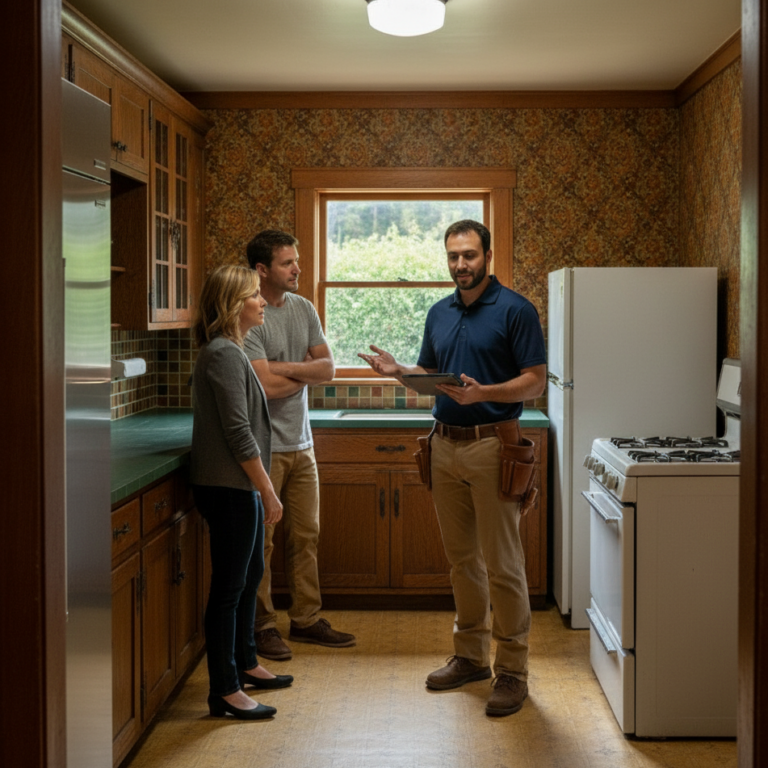
1. Free 15-Minute Call, Then a Walkthrough
We look at the panel, the wiring and the walls, and talk about what’s changing.
- What the house has now: panel, wiring type, wall finishes
- What you’re planning: heat pump, induction, EV charger

2. One Price, Room by Room
One price for the whole job, laid out room by room, so you see where it goes.
- Wiring, panel, wall repair and paint in one number
- Order of rooms planned around how you live in the house
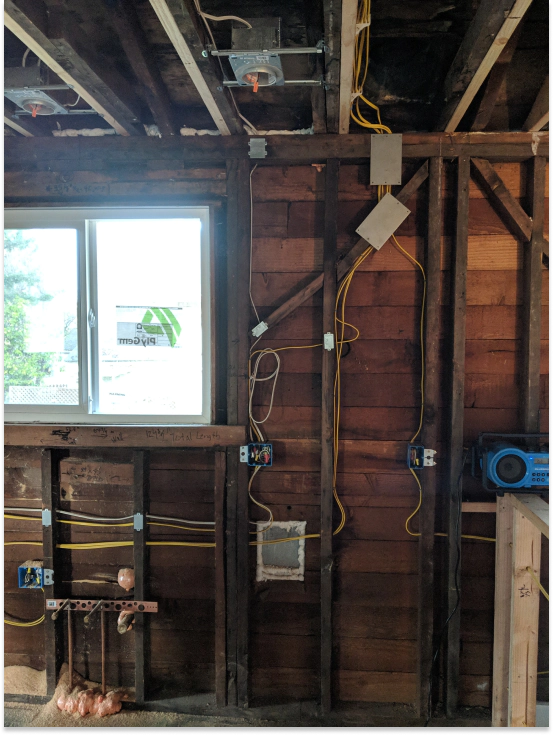
3. Permit and Inspections
We pull the permit and handle the inspections.
- One permit for the job
- Rough and final inspections scheduled by us
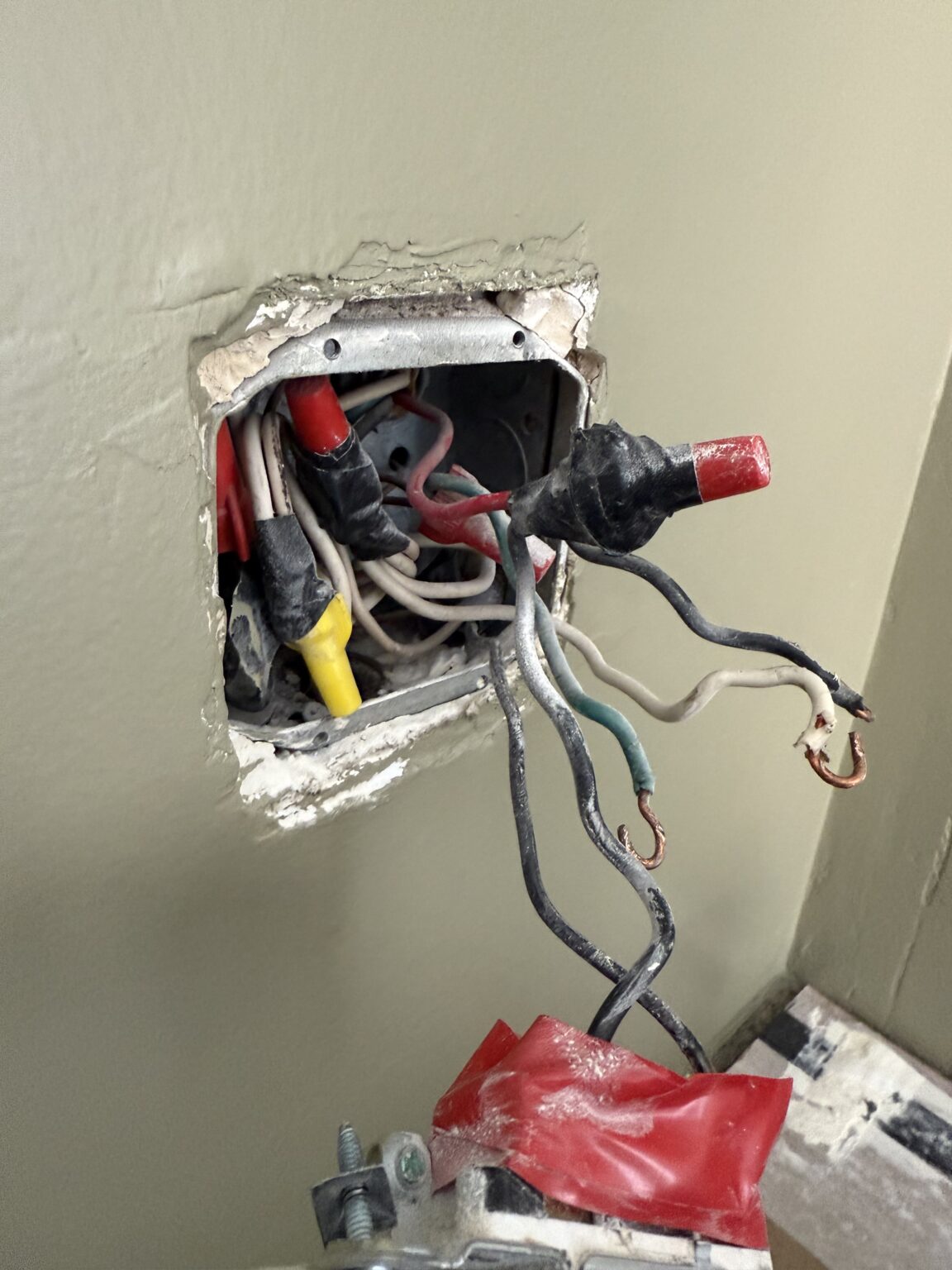
4. Protect, Then Rewire
Barriers, filtration and floor protection go up before the first wall opens. We open only what the new wiring needs, run it, and pass the rough inspection.
- HEPA filtration and dust barriers first
- Openings kept to what the wiring needs
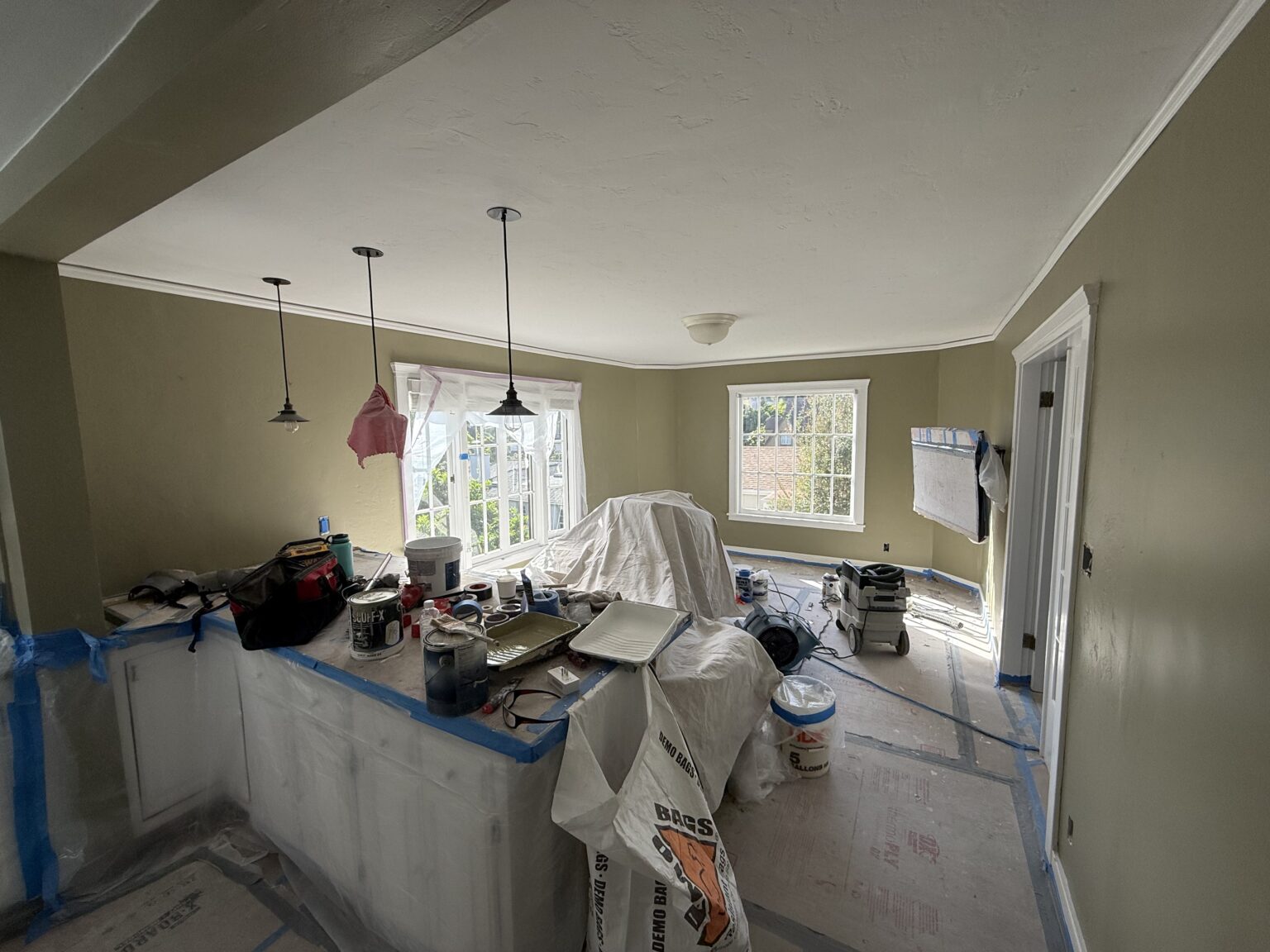
5. Close Up and Final
Plaster and drywall repaired, then paint. Final inspection, cleanup, and a house that looks like nothing happened.
- Walls finished to match
- You get a weekly update the whole way through
Questions We Hear
Do you have to tear out the plaster?
No. We open what the new wiring needs and fish the rest through. Then we repair what we opened and paint it.
Can you match our plaster?
Yes. Hand-troweled, smooth or textured, we repair plaster in plaster and match it to the wall around it.
How many holes will you cut?
As few as the house allows. Moving a switch and adding a light can take as few as three small openings. Insulation, blocking or old framing can mean more, and we’ll tell you before we start.
Can we live in the house during the rewire?
Yes. You can stay in the house during the rewire, though it adds to the cost.
How long does it take?
Most whole-house rewires take 3 to 6 weeks.
What does it cost?
Most whole-house rewires we do run $20,000 to $45,000, with wall repair and paint included. Where yours lands depends on the size of the house, how much is changing, and whether you’re living there during the work.
Is knob and tube a problem for insurance?
Often, yes. Many insurers won’t cover a house that still has it, and some will only renew once it’s replaced.
Should we upgrade the panel at the same time?
Usually. The walls are already open and the permit is already pulled. If you’re planning a heat pump, induction or an EV charger, it’s the time to size for them. How we handled a 400-amp service upgrade.