El Cerrito Remodel · Part 2 of 3

Alex Pell
Owner, Beyond Green Construction · 7 min read
Kitchen remodel cost in the Bay Area runs from about $20,000 to well past $150,000 when we price one today, and the finishes you pick are rarely what puts you at one end or the other. Two kitchens with the same cabinets, the same quartz and the same range can come in $50,000 apart. The difference is the house: what’s in the walls, what’s under the floor, and how much of it you’re changing.
Why the ranges online are so wide
Look up kitchen remodel costs and you’ll find ranges like $50,000 to $150,000. They aren’t wrong. They just treat a kitchen as a list of finishes: cabinets, counters, appliances, tile. Price the list, add labor, done.
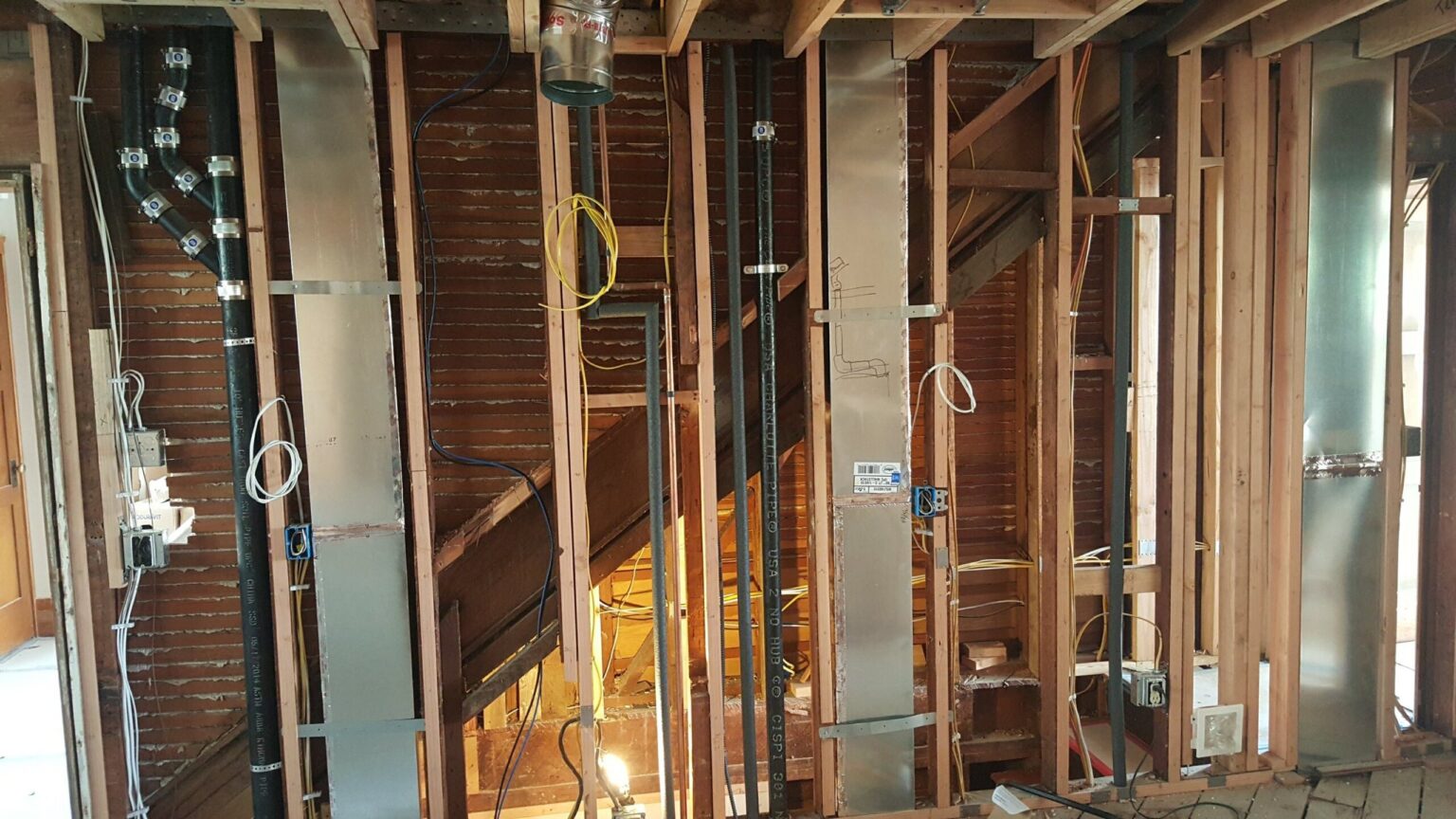
That’s the kitchen from the showroom. From the jobsite, a kitchen is plumbing, wiring and whatever the house is sitting on, with finishes on top. The finishes are the part you see and the part you choose. The rest is decided by the house you already own and how much of it you want to change.
What drives kitchen remodel cost in the Bay Area
Two questions sort almost every kitchen we price. What’s there now: how the existing plumbing and electrical are laid out, how old they are, and what the house sits on. And how much is changing: a partial remodel keeps the footprint and most of what’s in the walls, a full gut takes the room to the studs, and moving the sink or the range is another step up.
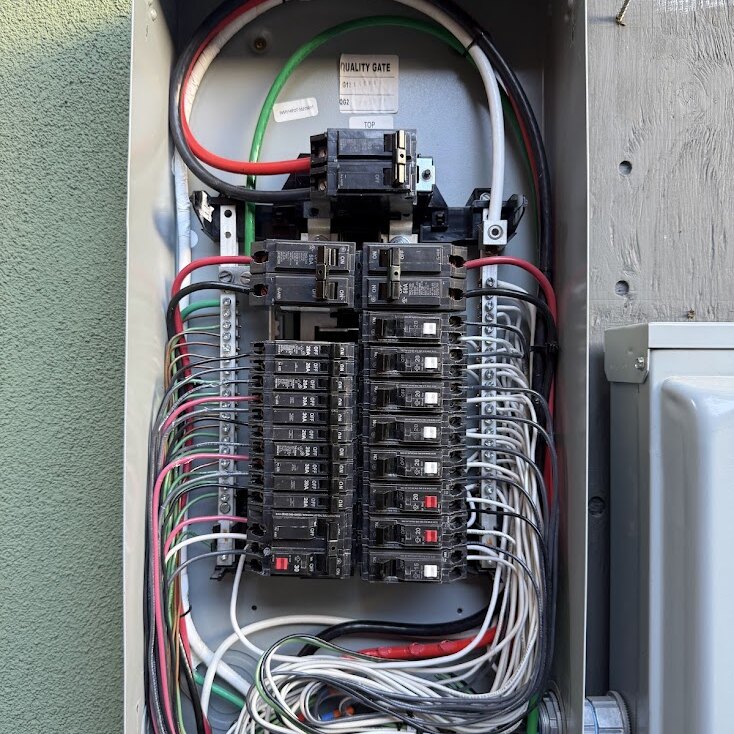
Electrical drives cost more than anything else. A modern kitchen usually ends up with six or more circuits: two for the countertop outlets, plus dedicated lines for the refrigerator, the dishwasher and the disposal, with more for a microwave, a hood or an electric range. Every one runs back to the panel, and code wants each one protected against shock and arc faults. In an older house, the kitchen may have been wired for a fridge and a toaster. That’s a lot of wire to pull, and sometimes the panel has nowhere to put it.
Plumbing comes next, and it depends on what’s underneath. With a crawlspace, moving a sink means a plumber working under the floor. On a slab, it means cutting the concrete, trenching a new drain at the right slope, and patching the floor before anything else goes in. Same sink, very different bill.
Five kinds of kitchen remodel
Here’s how kitchens sort out, and what each kind costs to build with us in 2026. Each range runs from modest finishes at the low end to high-end finishes at the top, which is why they overlap.
Lipstick and Rouge: $20,000 to $55,000. A partial remodel in the same footprint. New counters, new cabinets or fronts where the old ones were, a new sink and faucet, appliances swapped where they stand. The wiring and plumbing mostly stay as they are. This is our smallest kitchen remodel. Our remodels start at about $20,000.
Down to the Studs: $35,000 to $80,000. A full gut, same layout. Everything comes out to the framing, but the sink, range and fridge go back where they were, and the house needs no electrical upgrade.
Musical Chairs: $45,000 to $100,000. A full gut with fixtures on the move: the sink goes to the island, the range trades walls. With a crawlspace below, the plumbing is within reach, so moving it is real work, but straightforward work.
The Jackhammer: $50,000 to $120,000. The same moves on a slab. Every relocated drain means cutting and trenching concrete, which is why the top of this range runs so much higher.

Power Play: $70,000 to $150,000 and up. Any of the above, plus new circuits and an electrical service upgrade. When the electrical panel or the service coming into the house is too small for the new kitchen, often because of an electric or induction range, the job grows to include a new panel, sometimes new service from the utility, and the permits and scheduling that come with it. We wrote about one of those service upgrades on an Adams Point ADU.
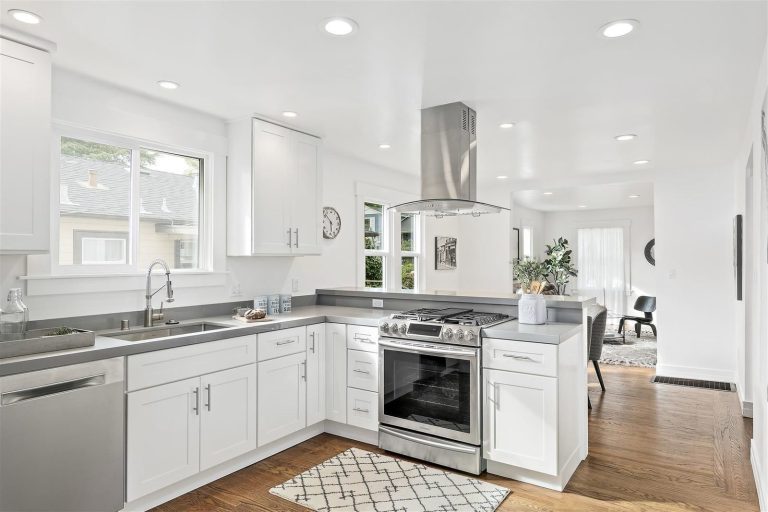
Our El Cerrito kitchen was a Power Play. The sink, range and fridge mostly stayed where they were, but the kitchen needed all new electrical, and that meant a new panel. On paper it looked like Down to the Studs. The panel moved it up a bracket.
The kicker: the building gets a vote. Put any of these in a condo or an HOA building and the number goes up. Board approvals, set work hours, elevator reservations, protecting the hallways, carrying everything in and out through the building: none of it shows up in the kitchen, and all of it is labor. Plan on roughly 10 to 20 percent more.
The part you control
Once you know which kind of kitchen you have, the range is set. Where you land inside it is up to you, and it comes down to finishes: the cabinets, counters, tile, fixtures and appliances you choose. Modest choices put you at the bottom of your range. High-end choices put you at the top.

That’s the most useful way I know to think about a kitchen budget. The house sets the range. You decide where you land in it.
It also explains why trading down finishes only goes so far. On a Lipstick and Rouge job, nearly all of the money goes into what you’ll see, so a different counter really moves the budget. On a Power Play job, finishes are about half, and the most modest option in every category still leaves you inside the Power Play range. That’s no reason to skimp on what you’ll see and touch every day. It’s a reason to know which kind of kitchen you have before you start trading down counters to make the math work.
Which one is yours?
You can get most of the way there before anyone gives you a number:
- Look under the house. Crawlspace or slab?
- Read your panel’s label (leave the cover on). How many amps, and are there open spaces?
- Decide what you want to move: the sink, the range, an island with a sink.
- Decide whether you’re going electric, especially with an induction range.
- Check whether there’s an HOA or a building in the picture.
Then have a contractor confirm it in person. A number given before anyone has looked under the floor and in the panel is a guess.
What I’d tell anyone pricing a kitchen
- Sort your kitchen before you shop for it. The kind of remodel sets the range; your finishes set where you land in it.
- Electrical drives the cost more than anything else. Find out early whether you’ll need an electrical upgrade.
- Moving a sink is a plumbing decision. On a slab, it’s also a concrete decision.
- Know how far trading down will get you. On a small job, your finishes are the budget. On a big one, they’re about half of it.
- In a condo, the building has a say. It adds cost you’ll never see in the kitchen.
The verdict
The online ranges are wide because a kitchen’s cost is mostly decided by the house, not the showroom. What’s in the walls, what’s under the floor, what the panel can handle and how much you want to move put you in one of five brackets. Your finishes decide where in that bracket you land. Know which kitchen you have, and the number stops being a mystery.
If you’re planning a kitchen and want to know which of these you’re looking at, start with our high-end kitchen remodeling page.
FAQ
How much does a kitchen remodel cost in the Bay Area?
In our 2026 pricing, about $20,000 to $150,000 and up. Which part of that you land in depends mostly on whether it’s a partial remodel or a full gut, whether fixtures move, and whether the electrical service needs an upgrade. Finishes decide where you fall within that range.
Why does moving a kitchen sink cost more on a slab?
With a crawlspace, the plumber can reroute the drain from under the floor. On a slab, the concrete has to be cut and trenched for the new drain, then patched. That’s why a kitchen with relocated fixtures on a slab can run up to about $120,000.
Do I need a panel upgrade for a kitchen remodel?
Not always. It depends on whether your panel has room for the new circuits and enough capacity for what you’re adding, especially an electric or induction range. When it doesn’t, the job moves into our highest bracket, about $70,000 to $150,000 and up.
What’s the smallest kitchen remodel you take on?
Our kitchen remodels start at about $20,000. The smallest are partial remodels in the same footprint, which run about $20,000 to $55,000.
Is $30,000 enough for a kitchen remodel?
For a partial remodel, yes. In our 2026 pricing, $30,000 sits in the lower half of our smallest range, $20,000 to $55,000: new counters, new cabinets or fronts where the old ones were, a new sink and faucet, and appliances swapped where they stand. A full gut starts around $35,000 with us, so $30,000 won’t take the kitchen to the studs.
What is the most expensive part of a kitchen remodel?
In our experience, the electrical. A modern kitchen needs six or more circuits, and when the panel or the service coming into the house can’t carry them, the job moves into our highest range, about $70,000 to $150,000 and up. Next comes moving plumbing on a slab, where every relocated drain means cutting concrete.
More from this job
El Cerrito Remodel
- Just one sink delayed a kitchen by nearly three months
- Your home’s condition drives kitchen remodel cost more than your finishes (you’re reading it)
- The wall wasn’t load-bearing. It still cost $5,000 to remove.
About the author
Alex Pell
I grew up in the Colorado mountains, the kid rebuilding CD players and racing a dog sled I’d built myself. (My great-grandfather held more than 100 patents; it runs in the family.) I was on my first jobsite at 17, building straw bale homes, then apprenticed as a carpenter, electrician and plumber, and started Beyond Green in 2017. Here I write about what’s behind the finished photos: the calls forced by budget, code and the site, and the ones that come from 25 years of seeing what holds up and what doesn’t.
The project
El Cerrito Remodel
Full home remodel in the El Cerrito flats, kitchen included
Facing a decision like this on your own project?
Talk it through with Alex on a free 15-minute call.
Book a 15-minute call (510) 239-7589